
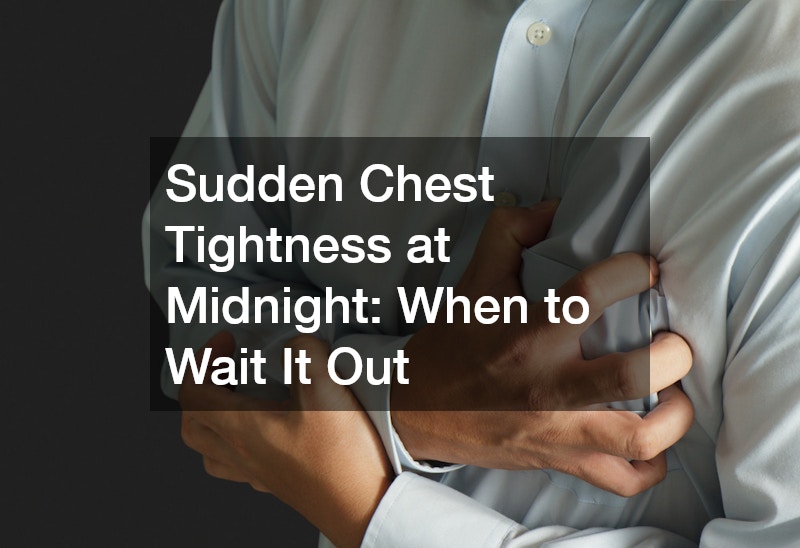
Waking up at midnight with a tight, uncomfortable feeling in your chest is unsettling, and it is easy for your mind to jump straight to the worst-case scenario. While some causes of nighttime chest tightness are harmless and resolve on their own, others require immediate attention. This guide walks through the common causes, warning signs that separate an emergency from a false alarm, and practical steps for deciding what to do in the middle of the night when your regular doctor’s office is closed.
Common Reasons Chest Tightness Strikes at Night
Chest tightness at midnight often has less dramatic explanations than people assume. Lying flat can worsen acid reflux, causing a burning or squeezing sensation that mimics heart-related pain. Anxiety and stress can also trigger tightness, rapid heartbeat, and shallow breathing that feels alarming even though it is not dangerous.
Muscle strain from daytime activity, poor sleeping posture, or even sleeping on a full stomach can contribute to discomfort that surfaces once you lie down. Understanding these everyday triggers can help you stay calmer while you assess whether the situation is serious.
- Acid reflux or heartburn worsened by lying flat
- Anxiety, panic attacks, or stress-related muscle tension
- Costochondritis or muscle strain from exercise or posture
- Sleep apnea causing shallow breathing and chest pressure
- Overeating or lying down too soon after a large meal
Warning Signs That Point to a Heart Problem
Some symptoms should never be brushed aside, regardless of the hour. Chest tightness accompanied by pain radiating into the arm, jaw, or back, along with shortness of breath, sweating, or nausea, can indicate a heart attack or another cardiac event. These symptoms deserve urgent evaluation rather than a wait-and-see approach.
The intensity and pattern of the discomfort matter too. Pain that builds quickly, feels crushing rather than sharp, or is paired with dizziness or fainting is a signal that something more serious may be happening inside your body.
- Pain spreading to the arm, neck, jaw, or back
- Shortness of breath at rest or with minimal movement
- Cold sweat, nausea, or lightheadedness
- Irregular or racing heartbeat
- Symptoms that worsen steadily instead of easing within minutes
How to Decide Between Waiting and Seeking Care
If your chest tightness is mild, comes and goes, and improves with rest, an antacid, or a change in position, it may be reasonable to monitor yourself for a short period. Keep track of how long the discomfort lasts and whether it is accompanied by any of the more serious warning signs mentioned earlier. Setting a firm time limit, such as fifteen to twenty minutes, can help you avoid dismissing something that is actually worsening.
Trust your instincts if something feels different from typical heartburn or muscle soreness. People often sense when discomfort is unusual, and that gut feeling is worth taking seriously rather than talking yourself out of seeking help.
- Note the exact time symptoms started
- Rate the pain on a simple one to ten scale
- Watch for new symptoms like sweating or breathlessness
- Try a position change or antacid if reflux seems likely
- Call for help immediately if symptoms escalate rather than ease
Choosing the Right Level of Care After Midnight
When symptoms are concerning but not clearly life-threatening, many people are unsure where to turn since regular doctor’s offices are closed for the night. The choice usually comes down to three options: riding it out at home, visiting a walk in clinic, or heading to the emergency room. Picking the right one depends less on how scared you feel and more on the specific symptoms you’re having. A walk in clinic with extended hours can evaluate mild to moderate symptoms, order basic tests like an EKG or blood pressure check, and advise whether further care is needed. Some urgent care locations even offer basic bloodwork or troponin testing on site, which can help rule out minor cardiac stress. Staff can also flag anything unusual and redirect you to an ER immediately if the picture changes. This option works best when breathing is normal, pain is mild and not worsening, and there are no signs of a cardiac emergency such as radiating pain, sweating, or dizziness. It’s also a reasonable choice if symptoms feel more muscular, related to anxiety, or tied to acid reflux than to your heart. If you’re uncertain whether your case qualifies, calling the clinic ahead of time can save you a wasted trip.
However, if symptoms are severe, sudden, or paired with any red-flag signs—crushing pressure, pain radiating to the arm or jaw, shortness of breath, sweating, or fainting—calling 911 or heading to an emergency room is the safer choice. These signs can signal a heart attack or another life-threatening event where every minute counts, and paramedics can begin treatment before you even arrive at the hospital. Emergency departments are equipped to run EKGs, blood tests, and imaging quickly to rule out heart attacks, blood clots, or other urgent conditions that cannot wait until morning. A troponin blood test, for instance, can detect heart muscle damage within a matter of hours, while a CT scan can quickly identify a pulmonary embolism or aortic issue. It’s worth noting that calling 911 is often faster and safer than driving yourself to the emergency room, especially at midnight when roads are quiet but reaction times may be slower. Emergency responders can also monitor vital signs, administer aspirin or oxygen, and alert the hospital before you arrive, shaving critical minutes off diagnosis and treatment. If in doubt, err on the side of urgent care rather than waiting to see if symptoms pass on their own.
- Mild, stable symptoms without red flags (brief tightness, no radiating pain, normal breathing) may suit urgent care or a telehealth check
- Severe, sudden, or worsening symptoms — crushing pain, shortness of breath, sweating, or pain spreading to the arm or jaw — call for emergency evaluation
- Emergency rooms can run an EKG and basic cardiac enzyme tests within 15-30 minutes, far faster than urgent care can arrange
- Urgent care centers typically lack on-site cardiac imaging and will simply redirect you to the ER if results look concerning, costing precious time
- If you have known heart disease, diabetes, or prior heart attack, default to the ER even for milder symptoms, since your risk profile changes the calculus
- Always err toward higher-level care if you are truly unsure — a wasted ER visit is far better than a missed heart attack
Following Up With Your Regular Doctor
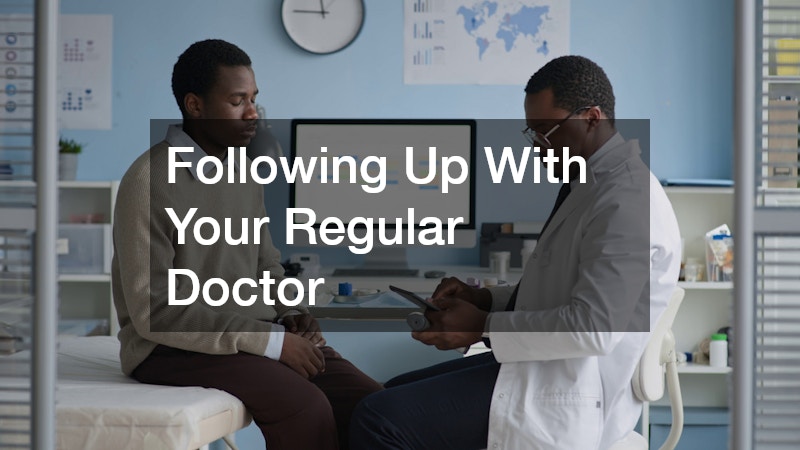
Even if your midnight chest tightness resolves on its own, it is important not to ignore the episode entirely. Skipping follow-up care because “it went away” is a common mistake, but a single episode can be the first clue to a condition that develops slowly, like GERD, costochondritis, or coronary artery disease. Scheduling a visit with your primary care physician within a few days to a week allows for a deeper look into potential underlying causes, such as acid reflux patterns, anxiety triggers, or early signs of heart disease that may not show up during a single emergency visit. Your primary care physician may also order follow-up tests that weren’t urgent enough for the ER but are still useful for ruling out longer-term risks, such as an EKG, bloodwork to check cholesterol and blood sugar, or a referral to a cardiologist or gastroenterologist for more specialized evaluation. These tests can catch patterns that a one-time emergency visit simply isn’t designed to detect. Bringing a written timeline of what happened helps your doctor make a more accurate assessment. Note the exact time the tightness started, how long it lasted, what you were doing beforehand (lying down, eating, stressed, exercising), and on a scale of 1 to 10, how severe it felt. Also record any accompanying symptoms, like shortness of breath, nausea, sweating, or a racing heart, plus what, if anything, made it better or worse, since these details often reveal patterns you wouldn’t otherwise notice.
Ongoing or recurring chest tightness, even if mild, is worth discussing rather than dismissing as a one-time fluke. Make an appointment within a few days if the episode has passed without other red-flag symptoms, and don’t wait until your next scheduled checkup months away. Before the visit, jot down details while they’re fresh: what time the tightness started, how long it lasted, what you were doing beforehand, and any accompanying symptoms like shortness of breath, nausea, or sweating. This kind of log helps your doctor spot patterns that a single retelling might miss, especially if the tightness has happened more than once. Your regular doctor can order follow-up testing such as an EKG, echocardiogram, or stress test, adjust medications that might be contributing to the symptom, or refer you to a cardiologist or gastroenterologist if a pattern suggests something like acid reflux, anxiety, or an early cardiac issue. Blood work checking cholesterol, blood sugar, and thyroid function is also common at this stage. Bringing up family history of heart disease or similar episodes can help your doctor decide how aggressively to investigate.
- Bring a symptom timeline noting date, time, duration, and what you were doing when the tightness started
- Note any triggers you noticed, like lying flat, eating a heavy meal, or feeling anxious
- Mention any family history of heart disease, especially relatives affected before age 55
- Share other relevant history, such as high blood pressure, diabetes, high cholesterol, or smoking
- Discuss lifestyle factors like diet, stress levels, exercise habits, and sleep position
- Flag if symptoms worsen when sleeping on your left side or right after eating late at night
- Ask about follow-up testing if episodes recur, such as an EKG, echocardiogram, or stress test
- Ask whether a heart monitor worn for 24-48 hours makes sense if episodes are intermittent
Sudden chest tightness at midnight can range from a harmless case of heartburn to a genuine medical emergency, and knowing the difference is what allows you to respond wisely instead of panicking or ignoring the problem. Pay close attention to accompanying symptoms, trust sudden changes in how you feel, and choose the level of care that matches the severity of what you are experiencing. Whether that means riding out mild discomfort, visiting an urgent care setting, or heading straight to emergency services, taking action is always better than guessing. Once the immediate concern passes, following up with your doctor ensures the underlying cause does not go unaddressed.
